About

Wednesday, 27 July 2016

Chloroclystis moths LARENTIINAE GEOMETRIDAE
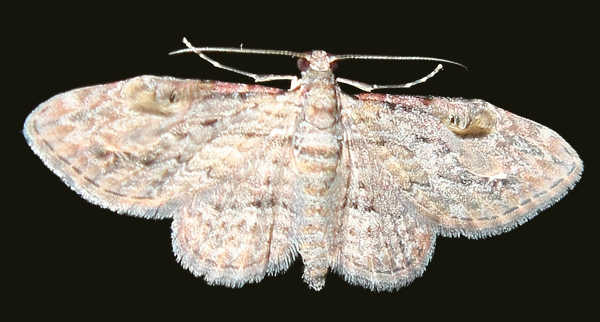


Family:- GEOMETRIDAE
Sub Family:- LARENTIINAE
Genus:- Chloroclystis
Species:- insigillata (male)


Note:- Males have tufts on the forewing like this male C. insigillata.


Family:- GEOMETRIDAE
Sub Family:- LARENTIINAE
Genus:- Chloroclystis
Species:- insigillata (Fem)


Family:- GEOMETRIDAE
Sub Family:- LARENTIINAE
Genus:- Chloroclystis
Species:- Possible insigillata (Fem)


Family:- GEOMETRIDAE
Sub Family:- LARENTIINAE
Genus:- Chloroclystis
Species:- catastreptes


Family:- GEOMETRIDAE
Sub Family:- LARENTIINAE
Genus:- Chloroclystis
Species:- catastreptes  (Possibly)


**********************************************************************************

Wednesday, 20 July 2016

Some more Casbia Moths

This week, continuing on from the Casbia moths last week, here are some more moths I believe belong to the Genus Casbia, CABERINI ENNOMINAE GEOMETRIDAE.
The identification of the named ones is not certain, but I believe they are correct.


Family:- GEOMETRIDAE
Sub Family:- ENNOMINAE
Genus:- Casbia
Species:- rectaria


Family:- GEOMETRIDAE
Sub Family:- ENNOMINAE
Genus:- Casbia
Species:- Sp Possibly eremias
These ones often sit with their wings up like a butterfly.


Family:- GEOMETRIDAE
Sub Family:- ENNOMINAE
Genus:- Casbia
Species:- rectaria  (possibly)


Family:- GEOMETRIDAE
Sub Family:- ENNOMINAE
Genus:- Casbia
Species:- Sp

Family:- GEOMETRIDAE
Sub Family:- ENNOMINAE
Genus:- Casbia
Species:- Sp Possibly rectaria possibly female


**********************************************************************************

Wednesday, 13 July 2016

More Geometrid moths

Casbia rectaria CABERINI ENNOMINAE GEOMETRIDAE


Family:- GEOMETRIDAE
Sub Family:- ENNOMINAE
Genus:- Casbia
Species:- rectaria


 These moths have unusual markings on the forewing. They can vary from black or orange to creamy white and can at times be almost invisible due to loss of scales.
The most likely host tree here is the Alphitonia excelsa (Soap tree), which also hosts the larvae of the small but spectacular butterfly the Small Green-banded Blue (Danis hymetus). This is an excellent garden tree that is always full of insects and is a local native plant in this area.
Pomaderis lanigera is also said to be a host plant although probably more towards the coast.
Both plants belong to the family RHAMNACEAE.


This last moth is in the Casbia genus but may not be C rectaria. Next week I will add a number of photos from the Casbia genus showing the range we get here.


***********************************************************************************

Cernia amyclaria OENOCHROMINAE GEOMETRIDAE 


 Family:- GEOMETRIDAE
Sub Family:- OENOCHROMINAE
Genus:- Cernia
Species:- amyclaria


The only mention of host plants is that they can be found on Gum trees.

***********************************************************************************

Wednesday, 6 July 2016

Continuing the Geometrid moths

Ectropis excursaria BOARMIINI ENNOMINAE GEOMETRIDAE

We are now getting into a series of moths that are very hard to separate by photographs alone.
Ectropis excursaria have been found to breed on a large range of plants. Further information can be obtained from :-  http://lepidoptera.butterflyhouse.com.au/enno/excurs.html


Family:- GEOMETRIDAE
Sub Family:- ENNOMINAE
Genus:- Ectropis
Species:- excursaria


*********************************************************************************

Scioglyptis canescaria BOARMIINI ENNOMINAE GEOMETRIDAE

This moth, like the one above, are sometimes called bark loopers. In this case one common name is Fuscous Bark Moth.
I had this one in the genus Boarmia which it used to be in but was moved to Scioglyptis.
Although not completely sure of the species identification I am reasonably sure down to genus.


Family:- GEOMETRIDAE
Sub Family:- ENNOMINAE
Genus:- Scioglyptis 
Species:- canescaria


*******************************************************************************

Wednesday, 29 June 2016

Family Geometridae

The Family Geometridae are often called Loopers or Inchworms, because their way of moving by bringing the back legs up to the forward end creating a loop, then stretching out with the forward portion. This has the advantage of being able to cover a greater distance quicker than walking.

Antictenia punctunculus OENOCHROMINAE GEOMETRIDAE


Family:- GEOMETRIDAE
Sub Family:- OENOCHROMINAE
Genus:- Antictenia
Species:- punctunculus


Anisozyga insperata GEOMETRINAE GEOMETRIDAE

NOTE the name change below.
The adults of the Genus Anisozyga are sexually dimorphic. That is, the males and the females look quite different. This photo is a female, the males being green with white markings.  In our case they are probably feeding on Angophora  (MYRTACEAE).

EDITED April 2019:- The accepted name for this moth is now Eucyclodes insperata


Family:- GEOMETRIDAE
Sub Family:- GEOMETRINAE
Genus:- Eucyclodes  was Anisozyga
Species:- insperata


Aporoctena scierodes ENNOMINAE GEOMETRIDAE


Family:- GEOMETRIDAE
Sub Family:- ENNOMINAE
Genus:- Aporoctena
Species:- scierodes


********************************************************************************


Wednesday, 22 June 2016

Gelechiidae

continued

Hemiarcha tetrasticta GELECHIIDAE


 Family:- GELECHIIDAE
Sub Family:-
Genus:- Hemiarcha
Species:- tetrasticta


Positive identification of this moth is not certain. Although a reasonably good match from other photos, there is a lot of variation in the markings. Although we often see them here, most of the samples in collections seem to be taken in the far north tropics. This may simply mean no one has yet collect them here.


**********************************************************************************

Stegasta variana GELECHIINAE GELECHIIDAE


Family:- GELECHIIDAE
Sub Family:- GELECHIINAE
Genus:- Stegasta
Species:- variana


 As the species name suggests, there is some variation in the colouring and pattern of the wing markings. These photos match up well with other samples.
The larvae are said to feed on Senna bushes, Caesalpiniacea family and this is likely to be the host plant here.


 This concludes the photos of Gelechiid moths for the present. Looking through my files I still have hundreds of photos waiting to be identified and there are sure to be more to come.

*********************************************************************************                                                    

Wednesday, 15 June 2016

Gelechiidae

 The family Gelechiidae is one of around 17 members I have found listed
from the super family Gelechioidea.
They are small, with a wingspan around 10 to 12mm. They have sharp sickle shaped upturned labial palpi and simple antennae.
There are about 800 recorded species in Australia.


Family:- GELECHIIDAE
Sub Family:- ANACAMPSINAE
Genus:-  Chaliniastis
Species:- astrapaea


Family:- GELECHIIDAE
Sub Family:- GELECHIINAE
Genus:- Macrenches
Species:- clerica


Family:- GELECHIIDAE
Sub Family:- GELECHIINAE
Genus:- Macrenches
Species:- eurybatis


The main visible difference between the last two is that M. eurybatis has cream wings with a dark stripe and M. clerica has white with a dark stripe.


Family:- GELECHIIDAE
Sub Family:- BRACHMIINAE
Genus:- Anaptilora
Species:- homoclera


All these moths are easy to overlook on the window at night. They generally fold their wings close to their bodies making a slim form around 5mm long.

*******************************************************************************