About

Friday, 31 March 2017

 Hypertrophidae

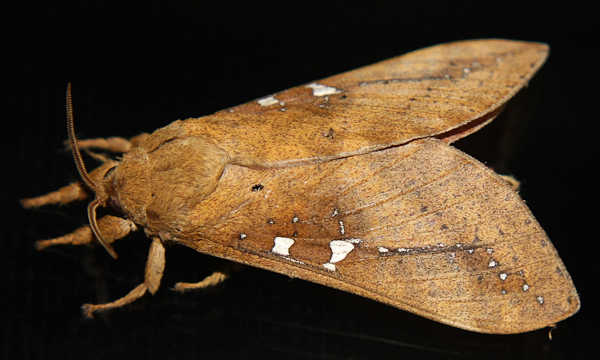
Hypertropha possibly desumptana species HYPHERTROPHIDAE
This is one of those moths that has moved about a bit.
The original genus of Hypertropha was placed in the family Glyphipterigidae (Sedge moths), next it was transferred to Hypertropha in Copromorphidae (fruit worms), next it was placed in Hypertrophidae (twig moths), then reassigned to a sub family of Hypertrophinae in Glyphipterigidae, then moved again to Oecophoridae and finally moved (by I.F.B. Common Moths of Austrtalia P234) to a separate family Hypertrophidae.
Although most of the books and internet sites use Hypertrophidae as a family some are still placing the moths in Oecorphoridae.
Larval food is most likely Eucalyptus leaves.

Hypertropha   desumptana (Possibly)  HYPHERTROPHIDAE


Family:- HYPHERTROPHIDAE
Genus:- Hypertropha
Species:- desumptana (Possibly)


There is another genus Peritropha, which is sometimes placed in Depressariidae, which is similar, but I think Hypertropha is correct.

************************************************************************************
This weeks post is a little late because we had what could be called "a good bit of rain" during the week.
A tropical cyclone ( Debbie) crossed the coast about 1000 Km to the north of us then turned into a rain depression and headed south with heavy rainfall and a lot of local flooding.
(Search for cyclone Debbie, Australia on the internet and you will see what I mean.)
Hopefully the rain is not too late for the moths to take advantage of the rapid growth in the plants. It has been a very dry summer and this rain is quite late in the season.


**********************************************************************************

Wednesday, 22 March 2017

Teak moths

Hyblaea ibidias HYBLAEIDAE

Although this moth is related to H. puera which causes severe damage to the teak forests through India, Indonesia and New Guinea, the Hyblaea ibidias larvae feed on Bower vine Pandorea jasminoides, (BIGNONIACEAE).
The larvae have an unpleasant habit if handled, of squirting the contents of its gut at the source of the interference. 


Family:- HYBLAEIDAE
Genus:- Hyblaea
Species:- ibidias


 The rear wings are quite spectacular.


The last photo is a moth that has lost most of its scales and is in poor condition. This is unfortunately the state of many of the moths we are seeing. Poor rainfall coming in storms with little in between has resulted in a year with low moth numbers
and very few of the larger moths coming to light at night.


**********************************************************************************

Wednesday, 15 March 2017

Herminiidae

This family of moths have not been well studied. They are very similar to moths from the sub family of  Hypeninae in Noctuidae, so if trying to identify moths that look similar check both families.
The larvae that have been studied live on the dead and decaying leaves on forest floor.
Note the large labial palpi particularly on the first photos.


Family:-  HERMINIIDAE
Genus:- Simplicia
Species:- armatalis


Family:- HERMINIIDAE
Genus:- Simplicia
Species:- caeneusalis


Family:- HERMINIIDAE
Genus:- Lithilaria
Species:- ossicolor


Family:- HERMINIIDAE
Genus:- Nodaria
Species:- aneliopis (possibly)


***********************************************************************************


Wednesday, 8 March 2017

Aquatic moths

Margarosticha euprepialis ACENTROPINAE  CRAMBIDAE


Family:-  CRAMBIDAE
Sub Family:- ACENTROPINAE
Genus:- Margarosticha
Species:- euprepialis (probably)


Moths of the sub family ACENTROPINAE, which used to be called NYMPHULINAE, (and still is, by some sites and some books), are aquatic moths. There are believed to be some 50 species of aquatic moths in Australia.

The larvae live in the water obtaining oxygen through diffusion through the skin on the very small larvae, some capture oxygen from the surface and trap it in the hairs on their bodies, and most in Australia have sort of gills along the sides of their bodies.

The arrival of this moth is an interesting case. Our garden pond was leaking badly and needed to be repaired. In the process all the pond weed that we had died, and we replaced the plants with some bought from a pet supply shop and some from a local nursery. A couple of weeks after the pond was back in action we had this moth appear.
I am not sure if the moth is a local or brought in on the pond weed which probably came from the wholesale suppliers near the coast.

A Confusion of names
 Margarosticha euprepialis ACENTROPINAE  CRAMBIDAE
 Sub family of ACENTROPINAE was previously known as NYMPHULINAE and is still used on some sites and in older books. The name Nymphicula australis is also used for Margarosticha australis calling M. australis a synonym along with Cataclysta australis. 

Parapoynx diminutalis ACENTROPINAE CRAMBIDAE 

We have previously had another aquatic moth, Parapoynx diminutalis ACENTROPINAE CRAMBIDAE here, most likely breeding in our pond.


 Family:- CRAMBIDAE
Sub Family:- ACENTROPINAE
Genus:- Parapoynx
Species:- diminutalis


Hygraula nitens ACENTROPINAE CRAMBIDAE

This another aquatic moth we have had here. The hairs on the caterpillars are actually gills.
More information from:-
http://lepidoptera.butterflyhouse.com.au/acen/nitens.html
(you can copy and paste this into your browser)


Family:- CRAMBIDAE
Sub Family:- ACENTROPINAE
Genus:- Hygraula
Species:- nitens
***********************************************************************************


Wednesday, 1 March 2017

More Hepialidae

This is the last of the Hepialidae moths for the time being. Despite the difficulties with identification  they are a spectacular moth and a frequent visitor here.
I think all these moths belong to the genus Oxycanus.

EDIT August 2018:-  After receiving  considerable help from Ethan from the SA Museum, I now believe that all these moths are indeed Oxycanus  beltista.


HEPIALIDAE 0009 on  -3963
Family:- HEPIALIDAE
Genus:- Oxycanus 
Species:-  beltista
I believe that all those below are the same.


HEPIALIDAE 0011 - 3965

HEPIALIDAE 0059 - 4057


HEPIALIDAE 9953 on - 4016

HEPIALIDAE 9996  - 4052

HEPIALIDAE 9996 on - 4051


The reason for the unnamed photos is refer to the post February 15th 2017.

**********************************************************************************

Wednesday, 22 February 2017

Hepialidae continued

Here are another 6 moths from the family. Once again, positive identification is not possible and so they must remain a visual list of the moths from this location. For details see the "About" tab.

EDIT August 2018:- This post was edited to correct errors in the names. Please read the note about the edit on February 15th 2017.

HEPIALIDAE  9897 on -3985

Family:- HEPIALIDAE
Genus:- Oxycanus  beltista
Species:-  beltista
HEPIALIDAE 2949 -5427
Family:- HEPIALIDAE
Genus:- Oxycanus 
Species:-  beltista


HEPIALIDAE 2995 -5457
Family:- HEPIALIDAE
Genus:- Oxycanus 
Species:-  beltista


HEPIALIDAE 3160 - 5561
Family:- HEPIALIDAE
Genus:- Oxycanus 
Species:- barnardi

 HEPIALIDAE   3018 on - 5475

Family:- HEPIALIDAE
Genus:-   Oxycanus
Species:-  waterhousei
 HEPIALIDAE   7157 on -  2635

Family:- HEPIALIDAE
Genus:-    Oxycanus
Species:-  beltista


**********************************************************************************

Wednesday, 15 February 2017

Hepialidae

EDIT August 2018:- Please read the note at the end of this introduction.
This is one of the most difficult families to identify from photographs. The males often differ from the females, the males differ from each other and so do the females. There are regional differences as well. In fact the wing markings cannot really be relied on at all!

Some of the moths will be the same species with different markings because they were photographed over several years, and the changing ecology of the area may account for changing markings. The photographs were taken between 2010 and 2014, the last of the photos in May 2014 and, although it may be coincidental, this coincides with the removal of  a Eucalyptus tree, a Pink Bloodwood (Corymbia intermedia), which grew next to the house.

I believe that many of the photographs of the moths that I will put on the blog over the next few weeks are members of the Oxycanus genus, in fact I think most of them will be.
In keeping with the aims of this Blog, I will put all the Hepialidae moths that I have photographed on the Blog with numbers, and if anyone believes they can identify any of them with some certainty I would very much like to hear from you.

Edited August 2018:-  I have received considerable help from Ethan, a volunteer at the SA Museum with expertise in Hepialidae moths. Although there is always a chance that there are errors in the identification, I believe it is likely that they are all reasonably correct, but care should be taken. Where precise identification is required the only way is via dissection and DNA.

************************************************************************************
 HEPIALIDAE 2927 - 5414
Family:- HEPIALIDAE
Genus:- Oxycanus
Species:-  beltista

 HEPIALIDAE 3034 - 5485
Family:- HEPIALIDAE
Genus:- Oxycanus
Species:-  beltista
 HEPIALIDAE 3072 on - 5495
Family:- HEPIALIDAE
Genus:- Oxycanus
Species:- beltista
 HEPIALIDAE 9984 on - 4039
Family:- HEPIALIDAE
Genus:- Oxycanus
Species:-  beltista


HEPIALIDAE 9984 on - 4043 underside of 4039
Family:- HEPIALIDAE
Genus:- Oxycanus
Species:-  beltista

  HEPIALIDAE 9984 on - 4041
 Family:- HEPIALIDAE
Genus:- Oxycanus
Species:-  beltista
 HEPIALIDAE  3072 on - 5494
Family:- HEPIALIDAE
Genus:- Oxycanus
Species:- beltista
HEPIALIDAE  7122 on - 2613
Family:- HEPIALIDAE
Genus:- Oxycanus
Species:- beltista


***************************************************************************
 HEPIALIDAE  3297 - 0848
Family:- HEPIALIDAE
Genus:-  Oxycanus
Species:- beltista (most likely)
 HEPIALIDAE  3297 - 0849 same moth as 0848
Family:- HEPIALIDAE
Genus:-  Oxycanus
Species:-  beltista (most likely)


For anyone interested in looking up Hepialidae moths here a few web sites that are helpful.

http://bie.ala.org.au/species/urn:lsid:biodiversity.org.au:afd.taxon:27b930f3-9c63-442a-b1f3-984c802b6362#gallery

http://www.boldsystems.org/index.php/Taxbrowser_Taxonpage?taxon=Hepialidae&searchTax=

http://lepidoptera.butterflyhouse.com.au/hepi/hepialidae.html

********************************************************************************