About

Wednesday, 15 February 2017

Hepialidae

EDIT August 2018:- Please read the note at the end of this introduction.
This is one of the most difficult families to identify from photographs. The males often differ from the females, the males differ from each other and so do the females. There are regional differences as well. In fact the wing markings cannot really be relied on at all!

Some of the moths will be the same species with different markings because they were photographed over several years, and the changing ecology of the area may account for changing markings. The photographs were taken between 2010 and 2014, the last of the photos in May 2014 and, although it may be coincidental, this coincides with the removal of  a Eucalyptus tree, a Pink Bloodwood (Corymbia intermedia), which grew next to the house.

I believe that many of the photographs of the moths that I will put on the blog over the next few weeks are members of the Oxycanus genus, in fact I think most of them will be.
In keeping with the aims of this Blog, I will put all the Hepialidae moths that I have photographed on the Blog with numbers, and if anyone believes they can identify any of them with some certainty I would very much like to hear from you.

Edited August 2018:-  I have received considerable help from Ethan, a volunteer at the SA Museum with expertise in Hepialidae moths. Although there is always a chance that there are errors in the identification, I believe it is likely that they are all reasonably correct, but care should be taken. Where precise identification is required the only way is via dissection and DNA.

************************************************************************************
 HEPIALIDAE 2927 - 5414
Family:- HEPIALIDAE
Genus:- Oxycanus
Species:-  beltista

 HEPIALIDAE 3034 - 5485
Family:- HEPIALIDAE
Genus:- Oxycanus
Species:-  beltista
 HEPIALIDAE 3072 on - 5495
Family:- HEPIALIDAE
Genus:- Oxycanus
Species:- beltista
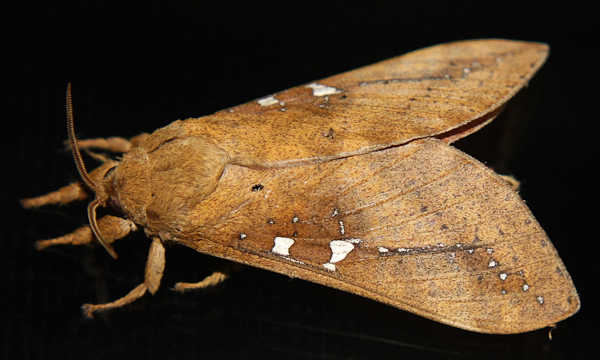
 HEPIALIDAE 9984 on - 4039
Family:- HEPIALIDAE
Genus:- Oxycanus
Species:-  beltista


HEPIALIDAE 9984 on - 4043 underside of 4039
Family:- HEPIALIDAE
Genus:- Oxycanus
Species:-  beltista

  HEPIALIDAE 9984 on - 4041
 Family:- HEPIALIDAE
Genus:- Oxycanus
Species:-  beltista
 HEPIALIDAE  3072 on - 5494
Family:- HEPIALIDAE
Genus:- Oxycanus
Species:- beltista
HEPIALIDAE  7122 on - 2613
Family:- HEPIALIDAE
Genus:- Oxycanus
Species:- beltista


***************************************************************************
 HEPIALIDAE  3297 - 0848
Family:- HEPIALIDAE
Genus:-  Oxycanus
Species:- beltista (most likely)
 HEPIALIDAE  3297 - 0849 same moth as 0848
Family:- HEPIALIDAE
Genus:-  Oxycanus
Species:-  beltista (most likely)


For anyone interested in looking up Hepialidae moths here a few web sites that are helpful.

http://bie.ala.org.au/species/urn:lsid:biodiversity.org.au:afd.taxon:27b930f3-9c63-442a-b1f3-984c802b6362#gallery

http://www.boldsystems.org/index.php/Taxbrowser_Taxonpage?taxon=Hepialidae&searchTax=

http://lepidoptera.butterflyhouse.com.au/hepi/hepialidae.html

********************************************************************************


Wednesday, 8 February 2017

Urolitha bipunctifera GEOMETRIDAE

Urolitha bipunctifera GEOMETRINAE GEOMETRIDAE


Family:- GEOMETRIDAE
Sub Family:- GEOMETRINAE
Genus:- Urolitha
Species:- bipunctifera


That is the last of the Geometrid moths for the time being.
There are still a lot more that I have yet to identify, or have been unable to identify.


***********************************************************************************

Heliocosma argyroleuca HELIOCOSMA Group


Family:- HELIOCOSMA Group
Sub Family:-
Genus:- Heliocosma
Species:- argyroleuca (probably)


Heliocosma argyroleuca is a member of the Tortricoidea superfamily. The wingspan is about 15 mm.


 Identification

 The internet sites I checked when trying to identify this moth shows there is a lot of confusion, particularly if going by wing pattern, colouring and other visual identifiers. Two of the normally reliable sites I use for identification have photos of what look like the same moth named as both Heliocosma argyroleuca and Heliocosma incongruana. This doesn't necessarily mean they are wrong, but there is a need to be careful.

The site boldsystems.org has a number of photos of each species separated into what appears to be the correct species groups, and so, for the time being, I will go with the best match from that site, which is Heliocosma argyroleuca. This also matches up with a couple of other sources, one of which I know the gentleman who photographed the moth is an entomologist.

This does bring up the subject of using the internet for identification. A number of sites are simply copying (or being given copies) of the information that appears on other sites. Contributors may also incorrectly identify a moth from another incorrect identification. The original identification may be incorrect and this is copied to the next site and so on.
The original photographer/ identifier may go back and correct the original source but the correction does not always flow on.

I try to get consensus from a number of sites and books and still end up with errors. I have seen photos that I have corrected after publication on this blog, turn up in other places uncorrected.

********************************************************************************

Wednesday, 1 February 2017

Thalaina selenaea  GEOMETRIDAE

Thalaina selenaea NACOPHORINI ENNOMINAE GEOMETRIDAE

These are a quite spectacular with flashes of red when they fly. They can also have a solid red stripe across the forewing.
The larval food is probably Acacia.


 Family:- GEOMETRIDAE
Sub Family:- ENNOMINAE
Genus:- Thalaina
Species:- selenaea


************************************************************************************

Syneora hemeropa BOARMIINI ENNOMINAE GEOMETRIDAE 


 Family:- GEOMETRIDAE
Sub Family:- ENNOMINAE
Genus:- Syneora
Species:- hemeropa


**********************************************************************************

Sterictopsis Poss argyraspis GEOMETRINAE GEOMETRIDAE


 Family:- GEOMETRIDAE
Sub Family:- ENNOMINAE
Genus:- Sterictopsis
Species:- argyraspis  (Possibly)

I am not certain of this species identification.
I believe the identification is correct down to genus.


********************************************************************************

Wednesday, 25 January 2017

Prasinocyma Genus GEOMETRIDAE

There are around 16 species in Prasinocyma in Australia
They mainly feed on Eucalyptus species.

Prasinocyma iosticta GEOMETRINAE GEOMETRIDAE


Family:- GEOMETRIDAE
Sub Family:- GEOMETRINAE
Genus:- Prasinocyma
Species:- iosticta


*********************************************************************************

Prasinocyma rhodocosma GEOMETRINAE GEOMETRIDAE

Common name Northern Emerald.
There is a bit of variation in the wing patterns so I have included a selection of photos.


Family:- GEOMETRIDAE
Sub Family:- GEOMETRINAE
Genus:- Prasinocyma
Species:- rhodocosma


The underside photos on the right are from the moths to their left.

Another in species (Prasinocyma semicrocea) was included on Wednesday, 12 October 2016


*********************************************************************************

Wednesday, 18 January 2017

Taxeotis moths, OENOCHROMINAE GEOMETRIDAE

Because there a number of species in the Taxeotis genus that look very similar, it is not possible to be absolutely sure of the identificationa of these moths from photos. However, I have tried to name them correctly but in this case there is a lot of room for error.
Please consider the species names to be possibles rather than absolute.

------------------------------------------------------------------------------------------------------------------------

Taxeotis intextata OENOCHROMINAE GEOMETRIDAE


Family:- GEOMETRIDAE
Sub Family:- OENOCHROMINAE
Genus:- Taxeotis
Species:- intextata (possibly)


The photo on the right is of a moth that has suffered a fair amount of damage from lost scales. this accounts for some of the difference between them.

*********************************************************************************

Taxeotis stereospila (possibly) OENOCHROMINAE GEOMETRIDAE


Family:- GEOMETRIDAE
Sub Family:- OENOCHROMINAE
Genus:- Taxeotis
Species:- stereospila (possibly)


**********************************************************************************

Taxeotis perlinearia (possibly) OENOCHROMINAE GEOMETRIDAE


Family:- GEOMETRIDAE
Sub Family:- OENOCHROMINAE
Genus:- Taxeotis
Species:- perlinearia (possibly)


**********************************************************************************

Wednesday, 11 January 2017

Pholodes sinistraria  "Sinister moth"

 Pholodes sinistraria BOARMIINI ENNOMINAE GEOMETRIDAE


They are not really "sinister", they are also sometimes called a "frilled bark moth".


Family:- GEOMETRIDAE
Sub Family:- ENNOMINAE
Genus:- Pholodes
Species:- sinistraria


Above is the female.


 Directly above is the male and to the right is the male underside.

The larvae of these moths is known to eat a variety of native and imported plants. According to Moths of Australia (Common 1990), they will eat garden mint, apple, apricot, citrus and lichi, as well as the native Eucalyptus, Angophora (Myrtacaea) and Exocarpus (Santalaceae).
As you can see in the photos the males and females are different.
Do note the magnificent pectinations on the antennae of the males.

***********************************************************************************

Phrissogonus laticostata LARENTIINAE GEOMETRIDAE

Although I did a blog on this moth back on the 7th of October 2015, I didn't realise at the time that this species also have distinct male and female forms.
The male is the one with the "tufts" on the leading edge of the forewing.
So here are the male and female together.


Family:- GEOMETRIDAE
Sub Family:- LARENTIINAE
Genus:- Phrissogonus
Species:- laticostata

This is the male.


Left is the female.


Phrissogonus laticostata larvae feeds on the flowers & buds of Acacia (Mimosaceae), but has also been found on Apple, Clematis Aristata and St John's Wort.

**********************************************************************************

Wednesday, 4 January 2017

OENOCHROMINAE

 In Moths of Australia, (Common 1990), refering to the family Oenochrominae, it says "there about 250 described species in 48 genera", in Australia.
The moths this week are from the genus Oenochroma.

Oenochroma vinaria OENOCHROMINAE GEOMETRIDAE 


Family:- GEOMETRIDAE
Sub Family:- OENOCHROMINAE
Genus:- Oenochroma
Species:- vinaria


 This is a fairly large moth, and as you can see from the photos the colours can vary quite a bit.

The dark purple/red photo is fairly true to colour for some of the darker ones we get.
Larvae feed on Proteaceae, mainly Grevillea and Hakea.


************************************************************************************

Oenochroma infatillis OENOCHROMINAE GEOMETRIDAE


Family:- GEOMETRIDAE
Sub Family:- OENOCHROMINAE
Genus:-  Oenochroma
Species:- infatillis


 Quite a common moth around here. A number of the genus feed on Proteaceae, so perhaps these do too.

*********************************************************************************

 Oenochroma cycnoptera OENOCHROMINAE GEOMETRIDAE


Family:- GEOMETRIDAE
Sub Family:- OENOCHROMINAE
Genus:-  Oenochroma
Species:- cycnoptera


I still have a few doubts about the identification of this moth, mostly because it is out of the range that is quoted for collected samples. It is the only time I have photographed it, although I have seen it a couple of other times.


********************************************************************************